
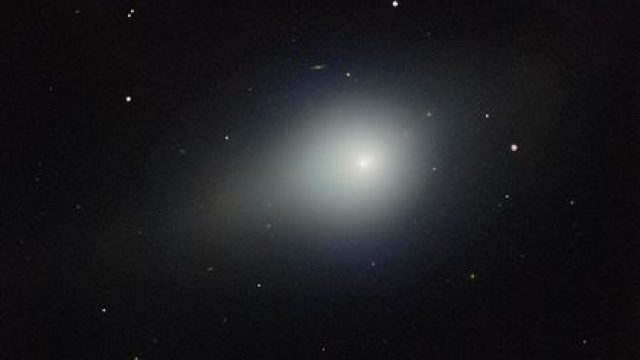
In a groundbreaking discovery, scientists have identified comet 3I/ATLAS as potentially the oldest object ever observed in our solar system. With estimates suggesting it could be nearly 12 billion years old, this celestial wanderer offers a rare glimpse into the early universe, predating the formation of our sun by over three times. As researchers delve into its unique composition, the implications for our understanding of cosmic history are profound.
The Surprising Age of Comet 3I/ATLAS
Comet 3I/ATLAS, originally spotted in 2019, has captivated astronomers with its unusual characteristics. Recent studies analyzing the gases emitted by this icy body reveal insights into its ancient origin. Unlike typical comets that typically range from a few thousand to a few million years old, 3I/ATLAS stands out as a relic from the early cosmos.
What Makes 3I/ATLAS Unique?
- Composition of Gases: The analysis of the comet's gases indicates a composition that hints at an origin far beyond our solar system.
- Formation Timeline: Understanding its age helps scientists piece together the timeline of cosmic evolution.
- Interstellar Journey: This comet traveled vast distances, signifying it as an interstellar object that has crossed into our solar neighborhood.
Implications of the Discovery
The findings regarding comet 3I/ATLAS hold significant implications for multiple fields of study, ranging from planetary science to cosmology. As researchers examine its composition and age, they can infer crucial information about the conditions that prevailed in the early universe.
Understanding Cosmic Evolution
Comets serve as time capsules, preserving the chemical signatures from the epoch of their formation. By studying 3I/ATLAS, scientists can learn about the primordial materials that contributed to the formation of stars and planets.
Why This Matters Now
The study of such ancient objects is not merely academic. As humanity grapples with questions about the origins of life and the universe, discoveries like those concerning comet 3I/ATLAS become increasingly relevant. They provide tangible links to our past and help inform our understanding of where we might be headed in the future.
Engaging the Public’s Interest
As news of this discovery spreads, it has the potential to reignite public interest in astronomy and space exploration. The idea that we can observe remnants from the dawn of time is captivating and encourages further exploration of our universe.
Conclusion: A Call to Explore
Comet 3I/ATLAS is more than just an ancient icy body; it is a beacon of knowledge about the universe's early days. As studies continue and new technologies emerge, the secrets held within this ancient comet could reshape our understanding of cosmic history. For anyone intrigued by the mysteries of the universe, following the developments of research on 3I/ATLAS is an exciting adventure.
