
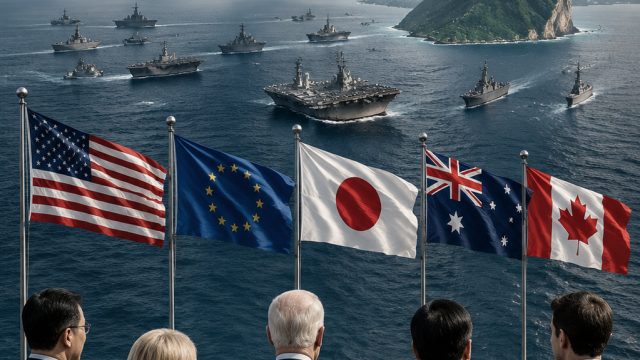
In a notable shift towards diplomatic unity, the United States, the United Kingdom, France, and Germany have issued a joint statement expressing deep concerns regarding China's increasing military presence and patrol operations near Taiwan. This development underscores the ongoing tensions in the region, highlighting the geopolitical implications of China's assertive actions at a time when international stability is crucial.
Understanding the Context of the Tensions
The Taiwan Strait has long been a flashpoint for US-China relations, with Taiwan asserting its sovereignty while China considers it a breakaway province. Recently, reports of enhanced military activities, including patrols by China’s newest aircraft carrier, the Fujian, have sparked alarm among global powers. This situation raises significant questions about the future of Taiwan and the balance of power in the Indo-Pacific region.
The Significance of the Joint Statement
The joint statement from these four nations not only reflects their individual concerns but also emphasizes a collective stance against perceived aggression from China. By coordinating their responses, these countries aim to send a clear message to Beijing regarding the importance of respecting international waters and maintaining peace in the region.
Implications for Global Stability
The situation in the Taiwan Strait is intricately linked to broader issues of international security and economic stability. As tensions rise, it is essential to consider the potential repercussions on global markets and diplomatic relations. The involvement of major Western powers indicates a growing concern that Chinese military activities could destabilize the region, impacting trade routes and international relations.
Economic Considerations
- Impact on Trade: The Taiwan Strait is a crucial shipping lane, and increased military presence could threaten the safety of maritime operations.
- Market Reactions: Investors are closely monitoring these developments, as geopolitical tensions often lead to volatility in global markets.
- Supply Chain Disruptions: Any escalation in military conflicts could result in significant disruptions to supply chains, especially in technology and automotive sectors.
The Role of International Diplomacy
As military posturing escalates, the role of diplomacy becomes increasingly vital. The collective response from the US, UK, France, and Germany may be the first step towards a more robust international framework aimed at addressing security concerns in the region.
Potential Diplomatic Solutions
- Engagement with China: Open channels of communication must be maintained to reduce misunderstandings and mitigate the risk of conflict.
- Regional Alliances: Strengthening alliances with Southeast Asian nations could provide a more unified front against aggressive maneuvers by China.
- International Monitoring: Proposals for international monitoring of military activities in the Taiwan Strait could help ensure compliance with maritime laws.
Conclusion: The Path Forward
The recent claims and military actions by China near Taiwan are not just a regional issue; they resonate globally, affecting international relations, trade, and security. As nations navigate this complex landscape, the emphasis on diplomatic engagement and cooperation will be essential to prevent escalation and promote stability. The world watches closely, as the outcomes of these tensions could redefine geopolitical alliances and force a reevaluation of security strategies worldwide.
