
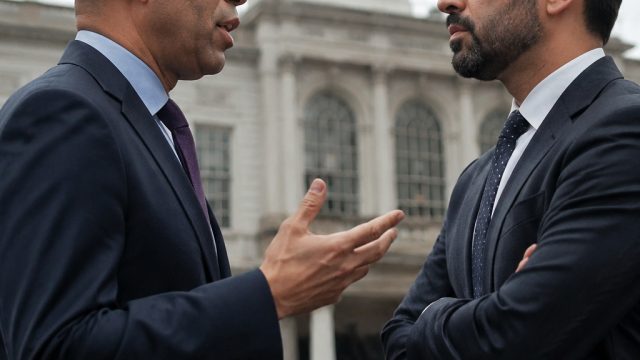
New York's Primary Showdown: Jeffries vs. Mamdani Dynamics
The political landscape in New York is currently under intense scrutiny as the state prepares for its critical primary elections. At the heart of this political battleground is a noteworthy face-off between prominent Democratic figures: Hakeem Jeffries and Zohran Mamdani. Their contrasting approaches to governance and party ideology have captivated both local and national audiences, raising questions about the future direction of the Democratic Party in New York.
The Significance of the Upcoming Primaries
As voters gear up for Tuesday's primaries, the stakes are particularly high. These elections are not just about choosing candidates but are indicative of a larger ideological struggle within the Democratic Party. Jeffries, as a seasoned establishment figure, represents a more traditional and moderate approach, while Mamdani embodies a progressive wing focusing on social justice and reform.
Understanding the Candidates
- Hakeem Jeffries: Known for his conciliatory style, Jeffries has been effective in rallying support across a broad spectrum of constituents.
- Zohran Mamdani: A rising star among progressives, Mamdani's policies prioritize community engagement and systemic change.
Key Issues at Play
The primary elections will feature discussions around several pressing issues that resonate with New Yorkers. These range from housing affordability to police reform and climate action. As both candidates articulate their platforms, voters must consider which vision aligns more closely with their values.
The Role of Endorsements
Endorsements can significantly influence electoral outcomes, and Mamdani's gaining traction among progressive leaders is noteworthy. His approach is resonating with younger voters looking for authentic representation. In contrast, Jeffries' connections to established political figures may provide him with the leverage needed to connect with older demographics.
What This Means for New York
The outcome of the primaries could have far-reaching implications not only for the Democratic Party but also for New York politics overall. Should Mamdani secure a victory, it could signal a shift towards more progressive policies, influencing future elections statewide and possibly even at the national level.
The Voter Base
New York's diverse population presents both candidates with unique challenges and opportunities. Voter turnout will be crucial, especially among young and first-time voters. Engaging these groups will likely determine who emerges victorious in a tightly contested race.
Conclusion: The Future of New York Politics
The primary elections on Tuesday are more than just about individual candidates; they represent a pivotal moment for the direction of the Democratic Party in New York. As the ideological divide widens, voters must weigh the implications of their choices carefully. The Jeffries vs. Mamdani showdown is a reflection of a broader national conversation about the future of politics and governance in America.
As we await the results, one thing is clear: the influence of these elections could shape the political landscape in New York for years to come. Make sure to stay tuned for updates as the outcomes unfold.
