
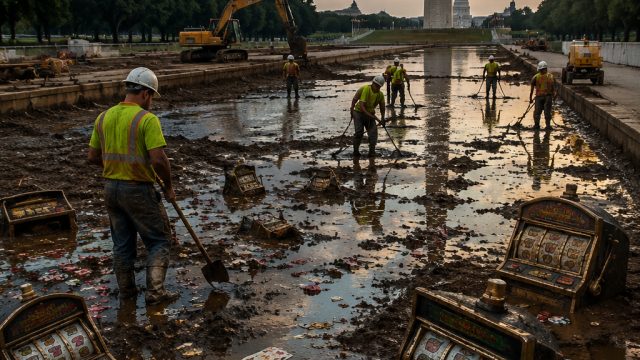
In recent weeks, the ongoing renovations at the Lincoln Memorial’s Reflecting Pool have taken an unusual turn, drawing public attention and igniting debates across multiple platforms. The iconic site, known for its historical and cultural significance, is now at the center of a controversy that involves allegations of vandalism, unexpected wildlife incidents, and rising costs. This article will cover the critical developments surrounding the Reflecting Pool renovation and why it matters to the public right now.
The Event That Sparked Outrage
What began as a standard renovation project has turned into a hotbed of allegations and controversies. Reports surfaced indicating that several dead ducks were found floating in the Reflecting Pool, leading to speculations about foul play. Former President Trump quickly took to social media, claiming this was the work of vandals aiming to sabotage the renovation efforts. However, questions regarding the accuracy of this claim have arisen, especially as internal documents have suggested otherwise.
Understanding the Claims
While Trump’s assertions paint a picture of intentional destruction, investigations have yet to confirm any malicious intent behind these incidents. Experts have pointed out that wildlife-related issues can arise in public spaces, especially during renovations. The question remains whether negligence or natural occurrences are to blame.
Rising Costs and Complications
The renovation project originally intended to enhance the Reflecting Pool’s aesthetic and structural integrity has now ballooned in both scope and budget. According to the latest reports, expenditures have far surpassed initial estimates, adding fuel to the fire of public scrutiny. Taxpayers are rightfully concerned about how their money is being allocated and the effectiveness of the renovation plans.
The Impact on National Parks and Memorials
The situation surrounding the Reflecting Pool is not merely a matter of local interest. It serves as a case study for how federal projects are managed and funded. With national parks and memorials struggling for resources, the handling of such a significant renovation raises critical questions about transparency and accountability.
- What are the implications for similar projects in the future?
- How can the government ensure proper management of taxpayer dollars?
- What is the role of the public in preserving historical sites?
Public Response and What Happens Next
The public’s response to recent developments has been mixed. Some citizens express anger over the alleged negligence that led to the death of the ducks and the escalating costs of the renovation. Others are skeptical about Trump’s claims of vandalism, viewing them as a diversion from the underlying issues.
The Role of Social Media in Modern Controversies
Social media plays a crucial role in shaping public perception during incidents like these. With hashtags trending and discussions heating up online, various perspectives emerge, complicating the narrative. Engaging with this discourse can offer insights into how citizens feel about public expenditures and government accountability.
Conclusion: Lessons Learned and Moving Forward
The unfolding events at Trump’s Reflecting Pool serve as a reminder of the complexities involved in managing national landmarks. As debates continue to evolve, it is imperative for stakeholders to engage with the public and provide transparent updates on project progress and challenges. Understanding the implications of this renovation will not only inform future projects but also ensure that historical sites receive the care and attention they deserve.
As we look to the future, one can't help but wonder how these events will shape public policy and accountability in federal projects. Will there be lasting changes in how we manage our nation’s treasures? Only time will tell, but it’s a conversation worth continuing.
