
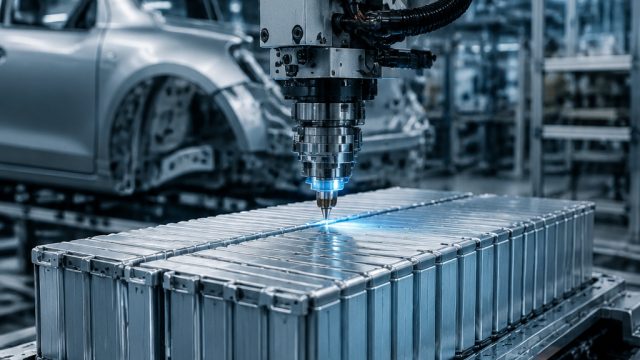
The landscape of electric vehicle (EV) design is on the verge of a monumental shift, driven by the advent of 3D-printed battery technology. This innovative manufacturing method promises to not only enhance the performance and efficiency of EVs but also streamline production processes, offering a sustainable path forward in automotive technology.
Why 3D-Printed Batteries Matter Now
As the world accelerates towards sustainable energy solutions, the automotive industry faces intense pressure to innovate. Traditional battery manufacturing methods are often resource-intensive and time-consuming. However, 3D printing allows for rapid prototyping and production, which can significantly lower costs and environmental impact.
The Current State of Battery Technology
Currently, battery production relies heavily on mass manufacturing techniques that are not only detrimental to the environment but also slow to adapt to new technological advancements. The ability to 3D print batteries could revolutionize this process:
- Customization: 3D printing enables the creation of batteries tailored to specific vehicle designs or performance requirements.
- Reduced Waste: Traditional manufacturing often leads to excess material waste. 3D printing minimizes this by using only the necessary materials.
- Faster Production Times: The rapid prototyping capabilities of 3D printing can lead to shorter timeframes from design to deployment.
The Impact on Electric Vehicle Design
The integration of 3D-printed batteries into EV design could lead to a reimagination of vehicle architecture itself. Automotive engineers can explore new layouts that optimize space and weight distribution, significantly enhancing vehicle performance.
Enhanced Performance and Efficiency
One of the most critical benefits of 3D-printed batteries is the potential for improved energy density. This refers to the amount of energy a battery can store in a given volume. A more compact and powerful battery can lead to:
- Longer driving ranges for electric vehicles, alleviating range anxiety among consumers.
- Reduced vehicle weight, which can enhance acceleration and handling.
- Faster charging capabilities, enabling users to spend less time at charging stations.
Sustainability: A Key Driver
As global attention shifts towards green technologies, the automotive industry is beginning to embrace sustainability more aggressively. 3D-printed batteries represent a significant step in this direction:
Lower Carbon Footprint
The traditional battery production process emits a considerable amount of greenhouse gases. In contrast, 3D printing offers a more environmentally friendly alternative. By reducing waste and energy consumption during manufacturing, this technology aligns with the automotive industry’s goals to minimize its carbon footprint.
Renewable Materials
Future advancements in 3D printing may also allow for the use of biodegradable or recyclable materials in battery production, further enhancing sustainability. The shift towards renewable materials can help create a circular economy within the automotive sector.
Conclusion: A Future Reshaped by Innovation
The introduction of 3D-printed batteries is set to enhance not only the performance and sustainability of electric vehicles but also the entire manufacturing process. As automotive manufacturers explore the potential of this technology, consumers can look forward to a new generation of EVs that are not just more efficient, but also more environmentally conscious. The revolution in EV design is not just on the horizon; it is already beginning.
