
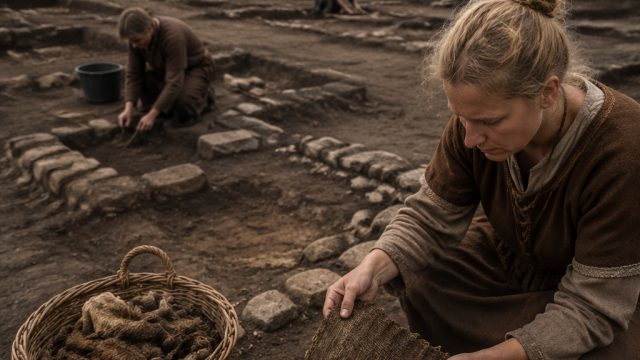
In a remarkable archeological breakthrough, researchers have unearthed an expansive Viking textile production site in Denmark, shedding light on the significance of textiles in Norse culture. This discovery not only enriches our understanding of Viking craftsmanship but also highlights the economic and social dynamics of the period.
The Significance of Textiles in Viking Society
Textiles played a crucial role in Viking society, serving not merely as clothing but also as indicators of wealth, status, and trade connections. The newly discovered site is believed to date back to the 8th century, a period renowned for the Vikings' expansive trade networks and cultural exchanges.
Insights into Viking Daily Life
The archaeological team, led by Dr. Lars Jensen, has found several tools and remnants of textile production, including spindle whorls and weaving implements. This suggests that the Vikings engaged in sophisticated textile manufacturing practices.
- Spindle whorls used for spinning wool and flax
- Various weaving tools indicating advanced techniques
- Evidence of dyeing processes and patterns
The Economic Implications
This discovery is particularly timely as it comes amidst growing interest in sustainable textiles and historical craftsmanship. The Viking textile site showcases how ancient communities relied on local resources to create valuable goods, emphasizing the importance of self-sufficiency and trade.
Connecting Past and Present
As modern consumers increasingly seek sustainable and ethically produced goods, the techniques and practices of Viking-era textile production offer invaluable lessons. Understanding how the Vikings managed their resources can inspire contemporary approaches to textile manufacturing.
Preservation Efforts and Future Research
In response to this significant find, local authorities are discussing plans to preserve the site and make it accessible for public viewing. Educational programs are also in the works to share the knowledge gained from this archaeological dig with schools and universities, fostering a deeper appreciation for Viking history.
Community Engagement
The community surrounding the site is expected to play a vital role in its preservation. Initiatives will encourage local involvement and promote tourism that respects and educates about the cultural heritage of the Vikings.
Conclusion: A Gateway to Understanding Viking Culture
The recent discovery of the Viking textile production site is a testament to the enduring legacy of this intriguing culture. As researchers continue to explore the implications of this find, it opens up a wealth of knowledge about the daily lives, economic practices, and social structures of the Vikings.
For enthusiasts of history and archaeology, this site represents not just a moment in time but a connection to our shared human experience. Stay informed about these developments as they may reshape our understanding of the Viking age and its relevance to contemporary issues in sustainability and craftsmanship.
