
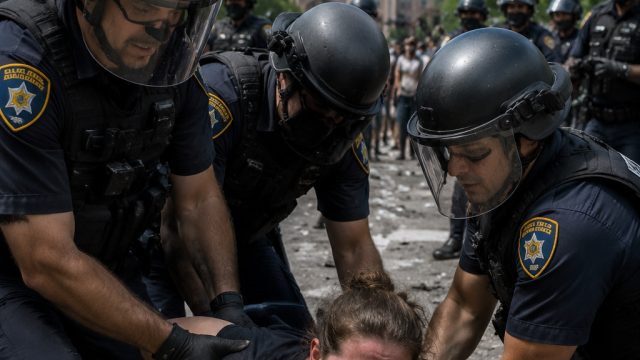
In a significant and controversial ruling, a Texas court has sentenced eight anti-ICE protesters to decades-long prison terms, marking a pivotal moment in the ongoing national dialogue about immigration policies and civil disobedience. The sentences, some exceeding 50 years, stem from a violent incident at the Alvarado ICE facility, raising questions about the intersection of activism and extremism in today's politically charged climate.
Understanding the Incident: A Breakdown of Events
The charges against these individuals arose from a chaotic incident at the ICE facility, where they were accused of launching a coordinated attack. This situation not only resulted in damage to property but also posed a serious threat to the safety of personnel working at the facility.
The Background of Anti-ICE Sentiment
As immigration continues to be a divisive issue in the United States, groups opposing ICE have gained visibility. While many advocate for peaceful protests and reform, the actions of the convicted individuals have sparked a fierce debate about the limits of civil disobedience. Activists argue that their cause is just, emphasizing the need for humane treatment of immigrants, yet the violent nature of their actions has led to serious legal repercussions.
Legal Implications: Sentencing and Its Ramifications
The sentences handed down by federal judges reflect a stern stance against what authorities classify as domestic terrorism. Each of the eight defendants received sentences ranging from 50 to 100 years, a decision criticized by some as excessive, while others view it as necessary to deter future violence.
Public Reaction: A Divided Opinion
The public's response to these sentences has been polarized. Supporters of stricter immigration controls and law enforcement have praised the convictions as a necessary measure to uphold law and order. In contrast, civil rights advocates argue that these harsh sentences undermine the right to protest and could chill dissent among activists.
- Supporters' Views: Many argue that the sentences are justified given the violent nature of the attack.
- Opponents' Arguments: Critics claim the sentences are disproportionate and could discourage future protests.
The Broader Context: Immigration Policy and Extremism
This incident and the resulting sentences occur against a backdrop of heightened tensions around immigration policy in the United States. The Biden administration's attempts to reform immigration practices have met staunch opposition from various political factions, leading to increased scrutiny and, at times, violent reactions from both sides of the debate.
Looking Ahead: What Does This Mean for Activism?
The implications of these sentences extend beyond the immediate legal consequences for the defendants. They raise important questions about the future of activism in America, especially as issues of immigration continue to polarize the public. Will these harsh penalties deter individuals from engaging in similar forms of protest, or will they spark further outrage and resistance?
Conclusion: A Critical Moment for Activism and Legal Boundaries
The sentencing of these eight protesters is not just a legal issue; it is a reflection of the current state of American society where activism, particularly around contentious issues like immigration, increasingly intersects with legal systems designed to uphold public safety. As the country grapples with these complexities, the conversations surrounding activism, extremism, and civil rights will likely intensify, shaping the landscape of future protests and legal frameworks.
