
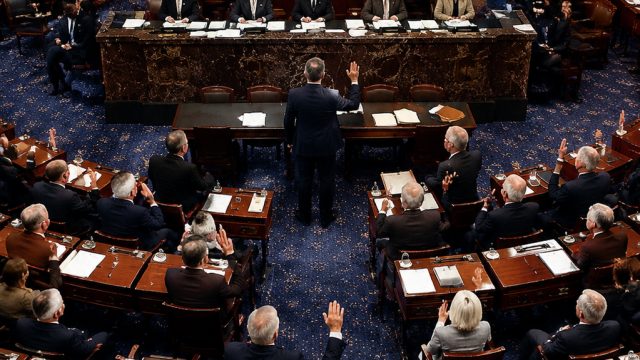
In a significant moment in American politics, the U.S. Senate has passed a War Powers Resolution aimed at curbing the President's ability to engage in military action without congressional approval. This landmark decision marks a pivotal shift in the balance of power between the legislative and executive branches, particularly concerning military engagements abroad.
Understanding the War Powers Resolution
The War Powers Resolution, enacted in 1973, was designed to ensure that both Congress and the President have a role in decisions to deploy U.S. armed forces. With recent international tensions, particularly with Iran, many senators have expressed concern over the executive branch's expansive military authority. By passing this resolution, lawmakers are asserting their constitutional duty to maintain checks on the President's military powers.
The Context of the Resolution
Recent events have escalated concerns regarding military actions in the Middle East. As the Trump administration engaged with Iran, tensions reached a boiling point that prompted Congress to act. The Senate's resolution has been framed as a direct response to military decisions that lacked adequate congressional oversight. This growing disconnect between the executive and legislative branches has sparked a national conversation about the appropriate limits of military power.
Impact on U.S.-Iran Relations
One of the primary motivations behind the resolution is to address the complexities of U.S.-Iran relations. While President Trump has claimed that Iran agreed to indefinite nuclear inspections, the reality on the ground has been more complicated. Iran has consistently denied such commitments, resulting in an uneasy geopolitical climate. The Senate's resolution aims to provide a framework that encourages diplomatic solutions rather than unilateral military actions.
The Broader Implications of Congressional Action
Beyond the immediate context of U.S.-Iran relations, the Senate's resolution signals a broader movement within Congress to reclaim its constitutional powers regarding military engagements. Historically, Congress has often deferred to the executive branch during times of crisis, but this resolution indicates a shift towards a more assertive legislative role.
Potential Outcomes and Future Actions
- Increased Congressional Oversight: Expect Congress to demand more transparency and accountability for military actions moving forward.
- Potential Legal Challenges: The resolution may face legal hurdles, with the executive branch likely to contest its limitations.
- Influence on Future Administrations: This decision could set a precedent for how future administrations engage in military conflicts.
Conclusion: A Call for a New Era of Military Accountability
The Senate's approval of the War Powers Resolution is a crucial step towards reinstating congressional authority over military actions. In an era where global conflicts can escalate rapidly, it is imperative that the balance of power between branches of government is upheld. By championing this resolution, the Senate is not just reacting to current events but is also shaping the landscape of U.S. foreign policy for years to come.
As we navigate these complex geopolitical waters, one thing remains clear: active participation and dialogue between Congress and the executive branch are essential for maintaining a responsible approach to military engagement. Moving forward, it will be vital for citizens to stay informed and engaged in discussions about military power, accountability, and the future direction of U.S. foreign policy.
