
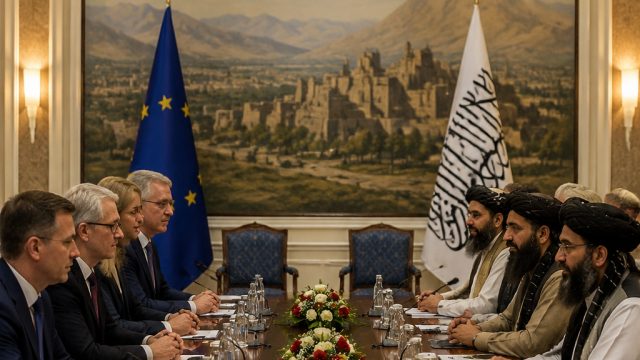
In a significant diplomatic development, the European Union has commenced closed-door discussions with a Taliban delegation regarding migration issues, particularly focusing on the return of Afghan refugees. This meeting marks the first formal engagement between the EU and the Taliban since the latter regained control in Afghanistan, underscoring the urgency of addressing the humanitarian crisis that has ensued.
Why the Talks Matter Now
The ongoing humanitarian situation in Afghanistan has prompted European nations to reconsider their immigration and deportation strategies. With thousands of Afghans displaced, many seeking refuge in Europe, the EU faces mounting pressure to devise a coherent policy for their return and rehabilitation. As winter approaches, the stakes are particularly high, making the EU's discussions with the Taliban all the more crucial.
The Current Refugee Crisis
Since the Taliban took control in August 2021, millions have been displaced internally and externally. According to recent reports from humanitarian organizations:
- Over 2.5 million Afghans are currently registered as refugees, primarily in neighboring countries.
- The UN has warned of severe economic collapse in Afghanistan, leading to a deepening humanitarian crisis.
- As of late 2023, many Afghans who previously worked with Western governments face persecution and fear for their lives.
What’s on the Agenda?
These first talks will likely cover several pressing topics, including:
- Voluntary Return of Refugees: The EU aims to establish a framework whereby Afghan refugees can safely return to their homeland if they choose to do so.
- Human Rights Guarantees: European officials are expected to press the Taliban for assurances regarding the treatment of those who return.
- Border Management: The discussions will also center on how to manage the influx of Afghan migrants and prevent illegal crossings into Europe.
Challenges Ahead
While the dialogue is a step forward, there are significant challenges that the EU must navigate:
- Human Rights Concerns: The Taliban's track record on human rights, particularly regarding women and minorities, raises concerns that could hinder effective cooperation.
- Political Backlash: EU member states may face internal opposition to any agreements reached with the Taliban, complicating consensus.
- Migrant Rights vs. National Security: Balancing the rights of migrants with national security interests will remain a contentious issue.
Geopolitical Implications
The outcome of these talks could reshape not only EU-Afghan relations but also influence broader geopolitical dynamics in the region. As the EU attempts to engage with the Taliban, it will need to consider:
- Influence of Neighboring Countries: Nations such as Pakistan and Iran, which already host significant Afghan populations, may react to increased EU involvement with the Taliban.
- Broader Migration Trends: How the EU addresses this crisis may set a precedent for its approach to migration from other conflict zones.
- EU’s Reputation: The EU’s handling of this sensitive issue may impact its global standing and relations with other countries.
Conclusion
The initial discussions between the EU and Taliban represent a crucial juncture in addressing the fallout from the Afghan crisis. As Europe grapples with its migration policies, the implications of these talks will resonate beyond the continent, influencing global perspectives on humanitarian aid and international cooperation. It is essential for all parties involved to approach these discussions with a focus on constructive outcomes that prioritize human rights and the welfare of Afghan citizens.
