
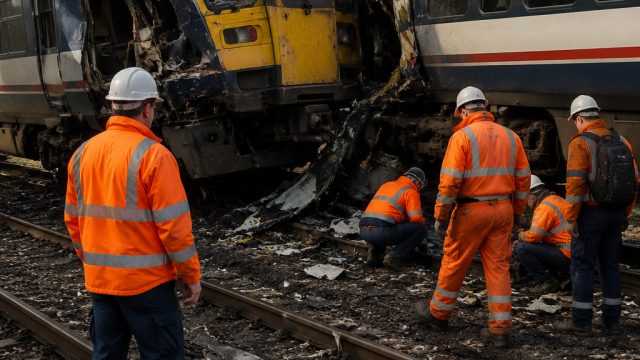
The recent train crash in Bedford, which tragically resulted in the death of a train driver and injuries to over 100 individuals, has raised critical questions about rail safety and operational protocols. As investigations deepen, insights from the preliminary report by the Rail Accident Investigation Branch (RAIB) reveal alarming details about the circumstances leading up to the catastrophic event.
The Incident: A Closer Look at the Circumstances
Initial findings indicate that the Luton Airport Express train, coming from Corby, passed through a red signal without halting. This failure to comply with established safety protocols is a shocking revelation, especially considering the significant human toll from the accident. The other train involved had been stationary due to an erroneous activation of its warning system, which had prompted it to brake unexpectedly.
Understanding Automatic Warning Systems
The effectiveness of automatic warning systems is integral to rail safety, providing critical alerts to drivers about signal statuses. In the case of the Bedford crash, it remains uncertain whether the automatic system signaled the driver in time. Investigators are currently assessing the following:
- Functionality of the warning system on the southbound Luton Express
- Potential lapses in communication regarding signal compliance
- Human factors that could have influenced the driver's reaction
Implications for Rail Safety Standards
This unfortunate incident has ignited a renewed debate about the necessity for stringent rail safety measures. Given the current focus on transportation safety across various sectors, the Bedford crash serves as a stark reminder of the vulnerabilities present within rail systems. Here’s why this matters now:
Heightened Public and Regulatory Scrutiny
As the investigation continues, public and regulatory bodies are expected to scrutinize the operational guidelines governing train movements.
- Enhanced training protocols for train operators to recognize and react to signals accurately.
- Comprehensive reviews of existing warning systems to ensure they function as intended.
- Implementation of more rigorous safety checks during routine maintenance of rail services.
Future of Rail Operations: A Call for Innovation
The aftermath of this collision emphasizes the need for innovation in rail operations. With technology evolving rapidly, the rail industry must adapt to leverage advancements that can enhance safety and operational efficiency.
Potential Technological Solutions
Some innovative solutions being discussed include:
- Integration of advanced sensor technology to prevent signal violations.
- Real-time monitoring systems that can provide instant feedback to drivers.
- Artificial intelligence systems to analyze data and predict potential safety hazards.
Conclusion: Learning from Tragedy
The Bedford train crash serves as a critical incident that must ignite urgent discussions around rail safety practices and standards. The findings from the ongoing investigation will likely set the stage for significant changes within the industry, aimed at preventing future tragedies. As the rail network continues to evolve, prioritizing safety and reliability must remain at the forefront of operational strategies. Stakeholders, including operators and regulatory bodies, must work collaboratively to ensure that lessons learned lead to actionable improvements for rail travel across the nation.
